
The Iron Chains of Wu
The Romance of the Three KingdomsThis flow traces Wu’s attempts to defend the Yangtze, from strategic naval resistance to the failure of its final river barriers.
increasing Bearing strength in each event
 decreasing
Bearing strength in each eventdecreasingA Southern Naval State

The River as Protection
Geography and Power
The Great River helps distinguish Wu from the northern powers and gives its rulers a defensive advantage.
A Naval Identity
Wu’s commanders develop expertise in river warfare. That strength does not guarantee political stability, but it shapes the kingdom’s strategic imagination.
Red Cliffs Proves the Advantage
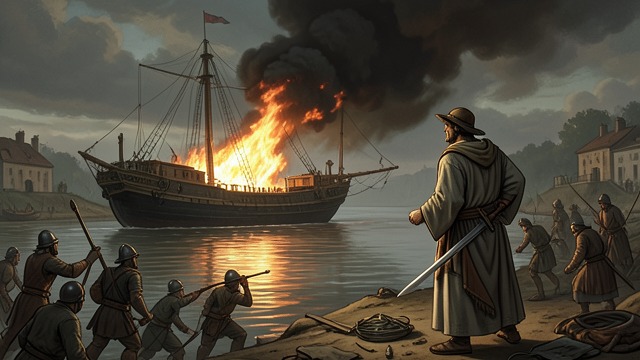
Northern Force Meets Water
A Land Army at Sea
Cao Cao brings a large army south, but his soldiers are inexperienced in naval warfare and vulnerable to sickness.
Fire on the Fleet
Wu exploits the river and the wind to burn Cao Cao’s chained ships. The victory establishes that the south can resist a larger northern army.
Xu Sheng’s False Wall
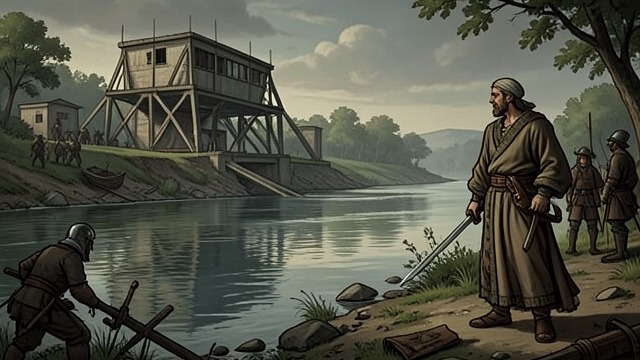
A Defense Built Overnight
An Imperial Fleet Appears
Cao Pi advances by river and expects to find the southern bank weakly defended.
A Deceptive Fortification
Xu Sheng constructs a vast false wall and armed display overnight. Cao Pi mistakes the spectacle for a major defensive system and withdraws without achieving his objective.
Chains and Spikes
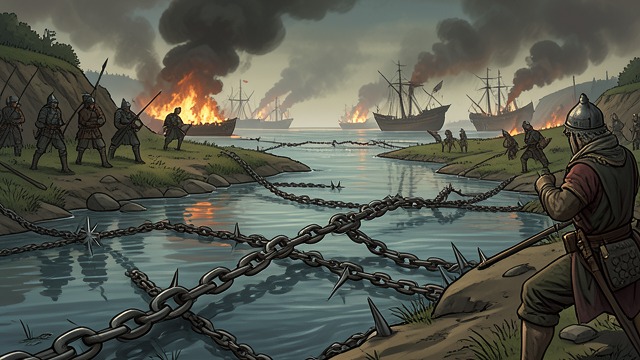
A Final Barrier
Cen Hun’s Engineering
Sun Hao’s court stretches iron chains and places spikes across the river to stop the Jin fleet.
The Fire Ships
Wang Jun sends burning vessels into the barriers. The chains melt and the spikes fail, opening the river route toward the Wu capital.
The River Route to Jianye
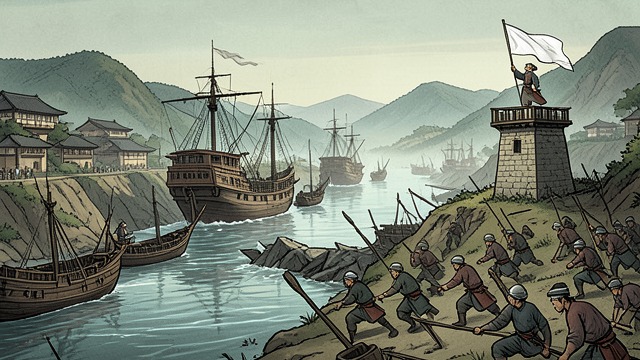
The Defense Collapses
Naval Passage
Once the river barriers are broken, Jin ships advance while land forces take cities along the way.
Surrender
The Wu army fragments, and Sun Hao submits after the capital is reached. The river that had protected Wu becomes the path of its final conquest.
From Sun Jian’s generation to Sun Quan’s reign
Winter AD 208
During Cao Pi’s invasion of Wu
During the Jin invasion of Wu
AD 280
